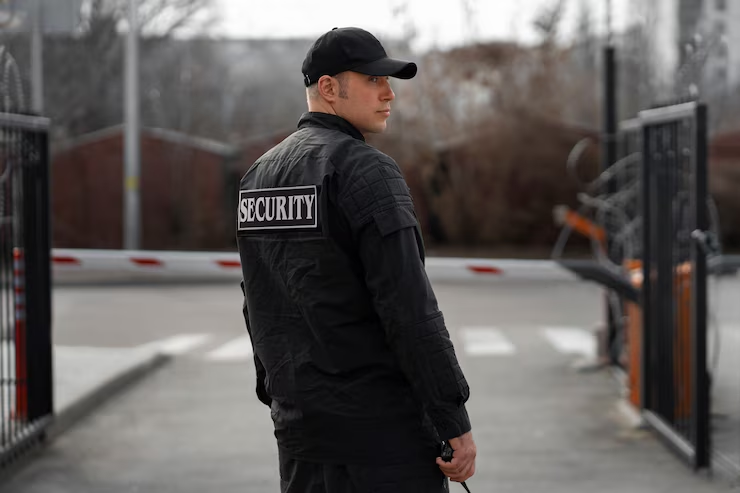

A bank security guard protects financial institutions by monitoring access points, preventing theft and fraud, responding to emergencies, and ensuring customer and staff safety through trained surveillance and proactive threat assessment.
Looking to hire bank security guards for your institution? See our Bank Security Guard Services
What Does a Bank Security Guard Do?
Bank security guards serve as the primary defense layer for financial institutions, protecting employees, customers, assets, and sensitive data from theft, vandalism, and unauthorized access.
Beyond physical presence, these professionals operate surveillance systems, enforce access protocols, coordinate with law enforcement during incidents, and maintain detailed incident reports—all while providing excellent customer service.
Core Protection Areas:
- Staff and customer safety
- Cash handling and vault security
- Access control and visitor management
- Emergency response coordination
- Compliance with banking security regulations
Bank Security Officer Job Description
If you’re evaluating or hiring for this role, here’s a condensed job description covering the core responsibilities, required qualifications, and reporting expectations:
Position summary: Monitor and protect a financial institution’s premises, staff, customers, and assets through access control, surveillance, patrol, and emergency response.
Key responsibilities:
- Verify identity of visitors, employees, and vendors at entry points
- Operate CCTV, alarm systems, and access control technology
- Conduct scheduled interior and exterior patrols
- Detect and report suspicious behavior
- Respond to robbery attempts, medical emergencies, and fire alarms
- Coordinate with law enforcement and preserve evidence when needed
- Maintain accurate incident documentation
- Support de-escalation of customer or visitor disputes
Minimum qualifications:
- Valid BSIS Guard Card (Level 1–5 depending on role)
- BSIS Firearm Permit (armed positions only)
- First Aid/CPR certification
- Strong communication and observational skills
- Ability to remain composed under high-pressure situations
Primary Responsibilities of Professional Bank Security Guards
1. Access Control and Perimeter Monitoring
Bank security officers manage all entry and exit points using identification verification, badge systems, and electronic access controls. They monitor restricted areas like vaults, server rooms, and cash handling zones through CCTV surveillance and physical patrols.
Key duties include:
- Verifying identity of all visitors and employees
- Operating surveillance equipment and alarm systems
- Conducting regular perimeter inspections
- Detecting suspicious behavior patterns
- Securing cash transfers and ATM servicing
2. Active Patrol and Physical Presence
Regular foot and vehicle patrols throughout bank premises deter criminal activity while identifying safety hazards. Guards inspect parking lots, ATM locations, loading docks, and adjacent properties.
3. Emergency Response and Crisis Management
Trained bank security guards handle robbery attempts, medical emergencies, fire alarms, and evacuation procedures following established protocols. They coordinate with local law enforcement, provide eyewitness testimony, and preserve evidence.
Response capabilities:
- Active threat management
- First aid and CPR administration
- Evacuation coordination
- Incident documentation
- Evidence preservation for investigations
4. Customer Assistance and Conflict Resolution
Security personnel often serve as the first point of contact, providing directions, answering questions, and managing disputes. Their de-escalation skills maintain a professional atmosphere while addressing customer concerns calmly.
5. Security Policy Enforcement
Guards ensure all staff and visitors comply with bank safety regulations, including proper key handling, document security, and visitor protocols. They also organize and supervise emergency drills to ensure preparedness
Essential Skills and Qualifications for Bank Security Professionals
Required Certifications and Training
California BSIS Licensing: All bank security guards in California must hold valid BSIS Guard Cards with appropriate levels:
- Level 1–2: Unarmed security personnel
- Level 3: Armed guard certification with firearm qualifications
- Level 4–5: Advanced protective services
Understanding security guard license requirements by state is crucial for compliance, especially if your institution operates across multiple states.
Additional Certifications:
- First Aid and CPR certification
- Emergency response training
- BSIS Firearm Permit (for armed positions)
- Baton and OC spray certification when applicable
Physical and Technical Competencies
Bank guards require excellent physical fitness for extended patrols, rapid incident response, and potential suspect detention. They must demonstrate proficiency in surveillance systems, access control technology, digital reporting tools, and alarm management.
Critical Interpersonal Abilities
High-pressure performance: Remaining composed during robbery attempts, conflicts, and emergencies ensures effective decision-making under stress.
Professional communication: Clear verbal and written skills facilitate customer service, incident reporting, and law enforcement coordination.
Conflict de-escalation: Advanced techniques for managing disputes between customers, employees, or external parties prevent escalation to violence.
Advanced Technology Supporting Bank Security Operations
Modern bank security integrates cutting-edge technology with trained personnel for comprehensive protection:
AI-Enhanced Surveillance Systems: High-definition cameras with artificial intelligence identify suspicious movements, unauthorized access attempts, and anomalous behavior patterns for proactive threat response.
Biometric Access Management: Fingerprint scans, facial recognition, and secure access cards control entry to sensitive areas, providing comprehensive movement logs and audit trails.
Digital Incident Management: Cloud-based platforms enable guards to document incidents instantly with photo evidence, GPS timestamps, and real-time supervisor notifications.
Remote Monitoring Capabilities: Live video feeds and mobile alerts allow continuous monitoring across multiple locations, ensuring rapid response regardless of guard positioning
Industry-Specific Security Challenges for Financial Institutions
Evolving Threat Landscapes
Bank security guards face increasingly sophisticated threats including advanced physical attacks, coordinated robberies, cyber-physical vulnerabilities, and internal fraud schemes. Continuous training updates ensure guards remain ahead of emerging tactics.
Balancing Security with Customer Experience
Guards must project authority and vigilance while maintaining a welcoming, non-intimidating presence. This balance preserves the professional atmosphere banks require while ensuring customer comfort.
Sustained Alertness Requirements
Long shifts demand constant focus and readiness despite routine periods. Professional guards maintain situational awareness through systematic patrol patterns and regular position rotation.
Armed vs. Unarmed Guards: Choosing the Right Protection Level
When to Deploy Armed Security Guards
High-value cash handling, high-crime locations, and institutions with previous security incidents benefit from armed security personnel. Armed guards provide maximum deterrence and rapid threat neutralization capabilities.
Ideal situations for armed guards:
- Main branches with large cash reserves
- Remote ATM servicing operations
- Banks in high-crime neighborhoods
- Institutions with previous robbery attempts
- Executive protection during cash transfers
Benefits of Unarmed Professional Guards
Customer-facing positions, lobby reception, and low-risk locations often perform better with unarmed professional guards who emphasize customer service while maintaining security vigilance.
Advantages include:
- Less intimidating presence for customers
- Focus on de-escalation over force
- Lower insurance premiums
- Excellent for access control and monitoring
- Professional appearance for brand reputation
Need help deciding which coverage fits your branch? Our Bank Security Guard Services page breaks down armed and unarmed options, or get a free security assessment
Frequently Asked Questions About Bank Security Guards
What’s the difference between security guards and police officers?
Security guards focus on prevention, deterrence, and private property protection for specific clients. Police officers have broader law enforcement authority and respond to public incidents. Guards work closely with police during emergencies
Can security guards make arrests?
California security guards can detain individuals for crimes committed on client property until law enforcement arrives (citizen’s arrest). They cannot pursue suspects off-property or exercise police powers.
Is a bank security guard the same as a bank security officer?
Yes, generally. The terms are used interchangeably in the industry, though some institutions reserve “officer” for senior or armed personnel. Responsibilities largely overlap regardless of title.
What licensing does a bank security guard need in California?
At minimum, a valid BSIS Guard Card. Armed positions additionally require a BSIS Firearm Permit and ongoing requalification. See our guide to guard card requirements for full details
Ready to Hire Bank Security Guards?
If you’re looking to staff or upgrade security at your branch, our Bank Security Guard Services cover armed and unarmed options, pricing factors, coverage areas, and how to get a free security assessment for your institution.